Home Education Support
Home Education Tutoring Built Around Your Learner
Home education can look completely different from one family to the next. Some families are very structured. Some are child-led or interest-led. Some spend a lot of time outdoors, attending groups, visiting places and learning through everyday life. Others want a clearer academic programme, particularly as children get older or begin working towards qualifications.
For some families, home education was always the plan. For others, it comes after a child has stopped thriving in school, after a period of physical or mental ill health, because school has become a source of anxiety, or because the family no longer feels that the education system is the right fit for their child.
There is no single version of home education that Plan For Success expects families to follow. Our role is to understand the learner, the family's priorities and where support would actually make life easier.
That might mean one subject a week. It might mean taking responsibility for teaching a subject from the beginning of a Key Stage through to GCSE or IGCSE. It might mean helping a young person explore something they are fascinated by. Or it might simply mean helping a family work out what comes next.
Home Education Does Not Mean Recreating School at Home
You may hear the term "homeschooling", particularly in American content online. In the UK, we tend to use "home education". The terms are sometimes used interchangeably, but culturally many home educating families do not see what they are doing as simply moving school into the house.
Learning might happen at the kitchen table, but it might also happen in a museum, outdoors, at a home education group, through a project, during travel, while cooking, through books, online courses, conversations, practical activities or independent research.
Teenagers may keep in touch with friends through online communities and group chats as well as meeting people face to face. Younger children may attend groups, sports, clubs and activities throughout the week.
That is why one of the common assumptions about home education, that children do not socialise because they are not in school, is far too simplistic. Home educated children often spend time with people across a much wider range of ages rather than almost exclusively with children born in the same academic year.
These approaches are not tidy categories and they frequently overlap. A family might be child-led in most areas while following an exam specification in one subject.
Why Do Families Choose Home Education?
There is rarely one simple reason.
Some parents begin home education because their child is not thriving. They may be struggling academically, emotionally or socially, or school may have become associated with anxiety and distress.
Some children have been out of education for extended periods because of physical or mental ill health and need a much gentler route back into learning.
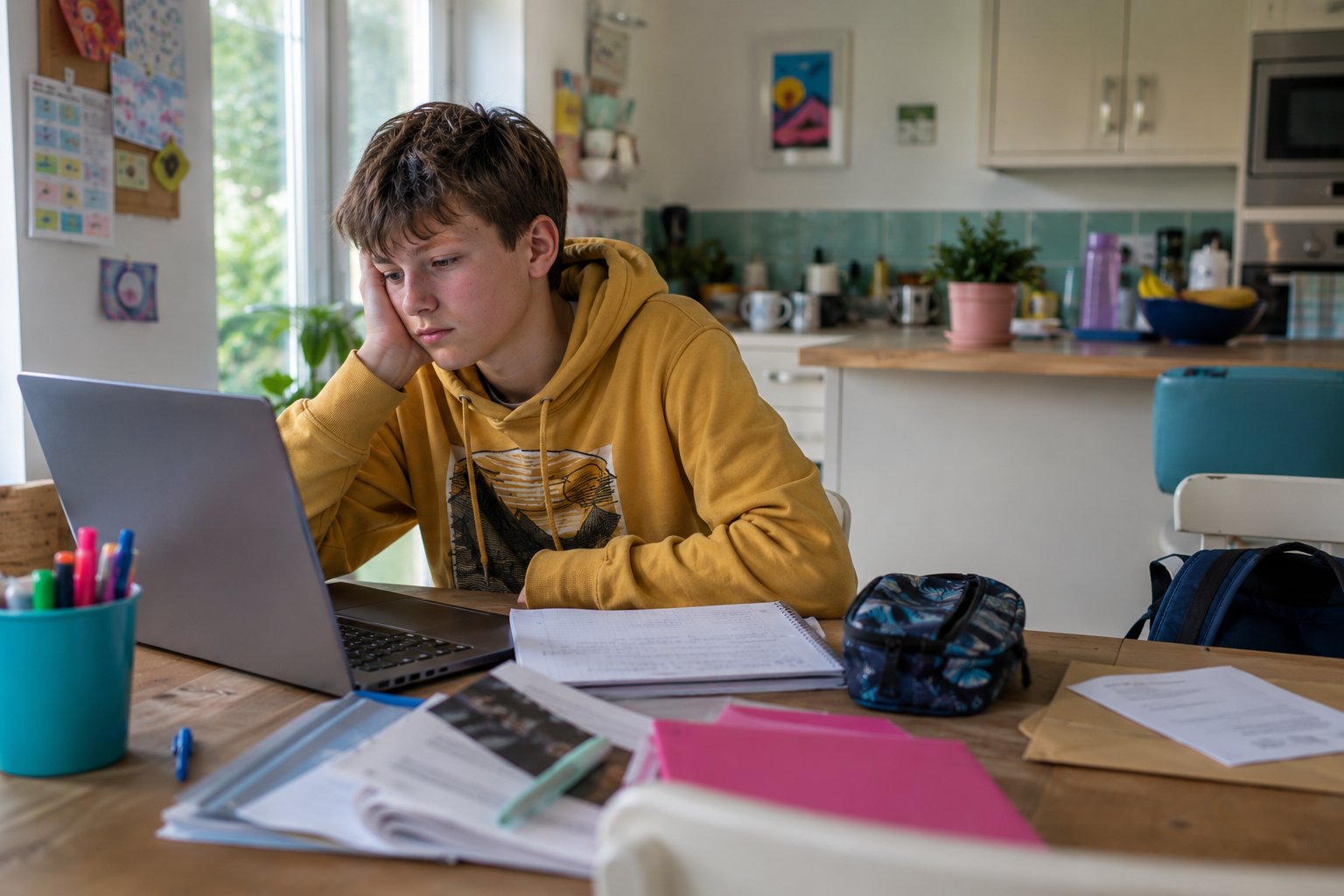
“My child was constantly being excluded because they ‘didn’t listen’ and ‘disrupted the other students’. I stopped feeling like the school was trying to understand why.”
Some families become frustrated with the education system itself. They may want more autonomy over what their child learns, how they learn it and the pace at which learning happens. They may disagree with aspects of the curriculum or simply feel that a large classroom and standardised expectations are not allowing their child to develop in the way they hoped.
Other families choose home education not because school has failed, but because they can see a different way of living and learning. Travel, family life, a child's particular interests or the freedom to follow learning as it develops can all be part of that decision.
Whatever brought a family to home education, the important question for us is not whether they are doing it the "right" way. It is whether the education they are building works for the learner in front of them.
Learning Can Start With Interest and Grow From There
As adults, we often learn because we become interested in something. Then, as we go deeper, we discover other things we need to know.
- A learner who loves coding but dislikes maths may eventually discover that stronger maths opens up more advanced possibilities. Suddenly the maths has a purpose.
- A young person who dreams of living in France may realise that learning the language is part of being able to build a life there and connect properly with local people.
- A child fascinated by horses may move naturally into anatomy, biology, nutrition, budgeting for care, measuring feed, land management and the history of domestication.
The academic subjects have not disappeared. They have become connected to something the learner already cares about.
Learning does not always have to begin with, "You need to know this because it is on the curriculum." Sometimes it can begin with, "You care about this. What do you need to learn in order to go further?"
That does not mean children should only ever learn things they already enjoy. There will always be knowledge and skills that are useful even when they are not immediately exciting. But interest can create a reason to learn something that previously felt irrelevant.
What Does "Falling Behind" Actually Mean?
This is one of the hardest questions for many home educating parents.
When children are very young, we are constantly reminded that development happens at different rates. One child walks earlier. Another talks later. We are told not to compare too much because children develop in their own time.
Then children reach school age and suddenly everything is measured against age-related expectations, targets and levels.
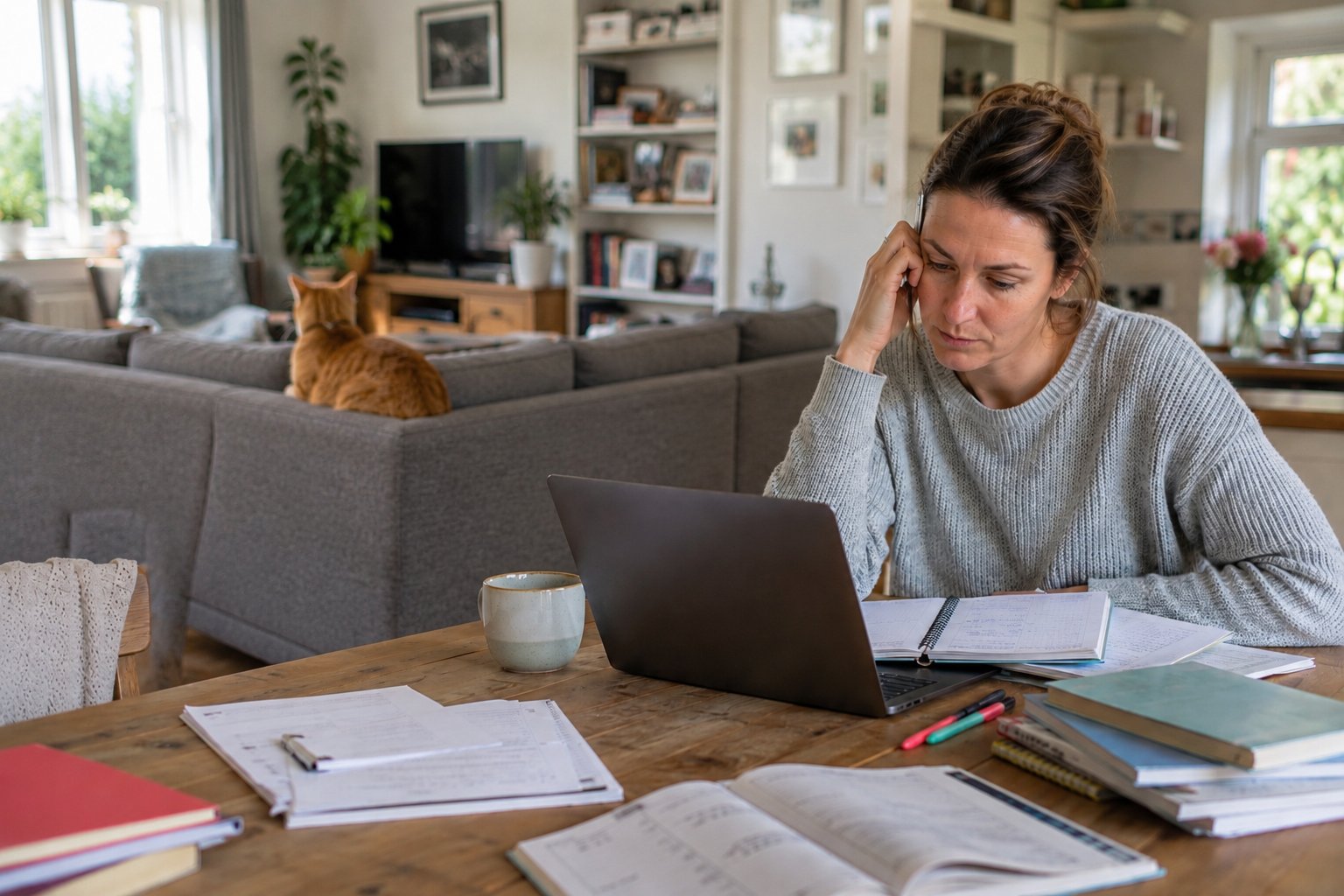
“One of the hardest things is knowing when to push and when to give space. School gives you age-related targets. Home education makes you question what ‘behind’ actually means.”
For parents moving from school into home education, that shift can be difficult to undo. You may know that your child needs time and space, while still worrying that if you do not push enough they will somehow "fall behind".
But behind whom?
There are times when benchmarks matter. A learner preparing for a GCSE needs the knowledge and skills required by that particular specification. A young person hoping to study A Levels, enter college or follow a particular career route may need certain qualifications.
But outside those points, being in a different place from another child of the same age does not automatically mean something has gone wrong.
What does this learner need to be able to do next?
That is often a much better starting point than asking whether they are "where they should be".
What Can a Home Education Tutor Actually Help With?
A tutor should not arrive and impose a school timetable on a home educating family. Their role should depend on what the learner needs.
Exploring an interest in depth
Sometimes the most useful support is helping a learner go further into something they are already fascinated by, and drawing the wider knowledge and skills out of it.
Rebuilding confidence in maths or English
Many learners arrive believing they cannot do a subject. Sessions can start well within reach, secure the foundations and rebuild the belief that progress is possible.
Teaching a subject consistently over time
Where a family would rather hand a subject over, a tutor can take responsibility for it, planning the sequence, choosing resources and teaching from the current starting point through a Key Stage.
GCSE or IGCSE from beginning to end
For learners working towards a qualification, sessions follow the chosen specification, building knowledge, application, exam technique and timed practice.
Filling gaps and rebuilding foundations
If learning has been disrupted or key ideas were never fully secured, tutoring can go back to those foundations first, at a pace that feels manageable.
Study skills and education mapping
Organisation, note taking and independent study habits, or a longer route mapped out so decisions about qualifications are made with time to spare.
The tutor is there to guide the learner, but what that guidance looks like should change depending on the learner and the goal.
Not sure which level of support would suit your family?
Talk it through with usHome Education Can Be Flexible. That Does Not Mean It Is Always Easy.
One of the biggest advantages of home education is flexibility. It can also be one of the hardest parts.
Creating a routine is not always straightforward, particularly with teenagers who would quite happily begin their day at lunchtime. It also takes time to continually find resources, plan meaningful activities, think about what should come next and make sure that learning remains varied enough.
For some families, that is where outside support helps.
A tutor can take one subject off your hands entirely. We can plan the sequence, select resources, teach the content and give you regular feedback about what has been covered.
Where families want something broader, we can also help plan learning around the learner's interests, strengths and longer-term goals rather than simply copying a school timetable at home.
Sometimes the value of tutoring is not just the hour of teaching. It is removing some of the planning, uncertainty and mental load from the parent as well.
Looking for support across several subjects?
If your family would like support across several subjects, our prepaid daytime Home Education Programmes offer individual 50-minute online tutoring sessions across two, three or four chosen subjects, with independent learning resources between sessions.
Explore Home Education ProgrammesDo Home Educated Learners Have to Follow the National Curriculum?
Not necessarily.
Home educating families use many different frameworks. Some choose the National Curriculum because it gives them a familiar structure. Others use an international curriculum, work from an exam specification, follow a particular educational philosophy or build learning around the child's interests.
The legal requirements around home education vary depending on where you live, so families should always check the current official guidance for their own part of the UK or country. In England, the starting point is the GOV.UK home education guidance.
What becomes more important when a learner is working towards a formal qualification is the specification.
If a young person intends to sit GCSEs or IGCSEs, the exam board determines the knowledge and skills that will eventually be assessed. At that stage, even families who have previously taken a very flexible approach often introduce more structure around those particular subjects.
Home education does not mean avoiding formal learning. It means having more choice about when, how and why that formal learning is introduced.
Does My Home Educated Child Actually Need GCSEs?
This is something many families become stuck on, particularly as children reach their teenage years.
There is often an assumption that because school students usually sit a large number of GCSEs, home educated learners should automatically do the same. That does not necessarily follow.
The better question is what the young person may want to do next.
College courses, sixth forms, apprenticeships, universities and particular careers can all have different entry requirements. Some pathways may require specific GCSEs, particularly English and maths. Others may be much more flexible.
For some learners, taking several GCSEs is absolutely the right route. For another young person, a smaller number of carefully chosen qualifications may make far more sense.
We can help families think through these choices in parent and learner consultations. We can look at current interests, possible future routes, qualification requirements and realistic timescales, then help map out what may need to happen next. Details of our consultations are on the services page.
The aim is not to collect qualifications for the sake of it. It is to make sure the learner keeps the doors open that matter to them.
If qualifications are part of the plan
Once a qualification has been chosen, planning becomes more concrete. The first step is choosing the appropriate qualification and exam board, because the specification then guides what needs to be taught. Tutoring can focus on building subject knowledge and applying it, then on exam technique, timed practice and past papers.
Home educated learners often sit exams as private candidates, so centres that accept private candidates, entry deadlines and the practical requirements of individual subjects are worth researching early. Plan For Success supports the teaching and preparation, while families arrange exam entry directly with the centre.
You can see the full range of what we offer on our services page and meet the people who would be teaching on our tutor profiles page. If your family is travelling while home educating, our guide to worldschooling for travelling families covers how learning and qualifications can fit around a moving timetable.
Support for Learners Who Need a Different Approach
A significant number of home educated learners do not fit neatly into traditional educational expectations.
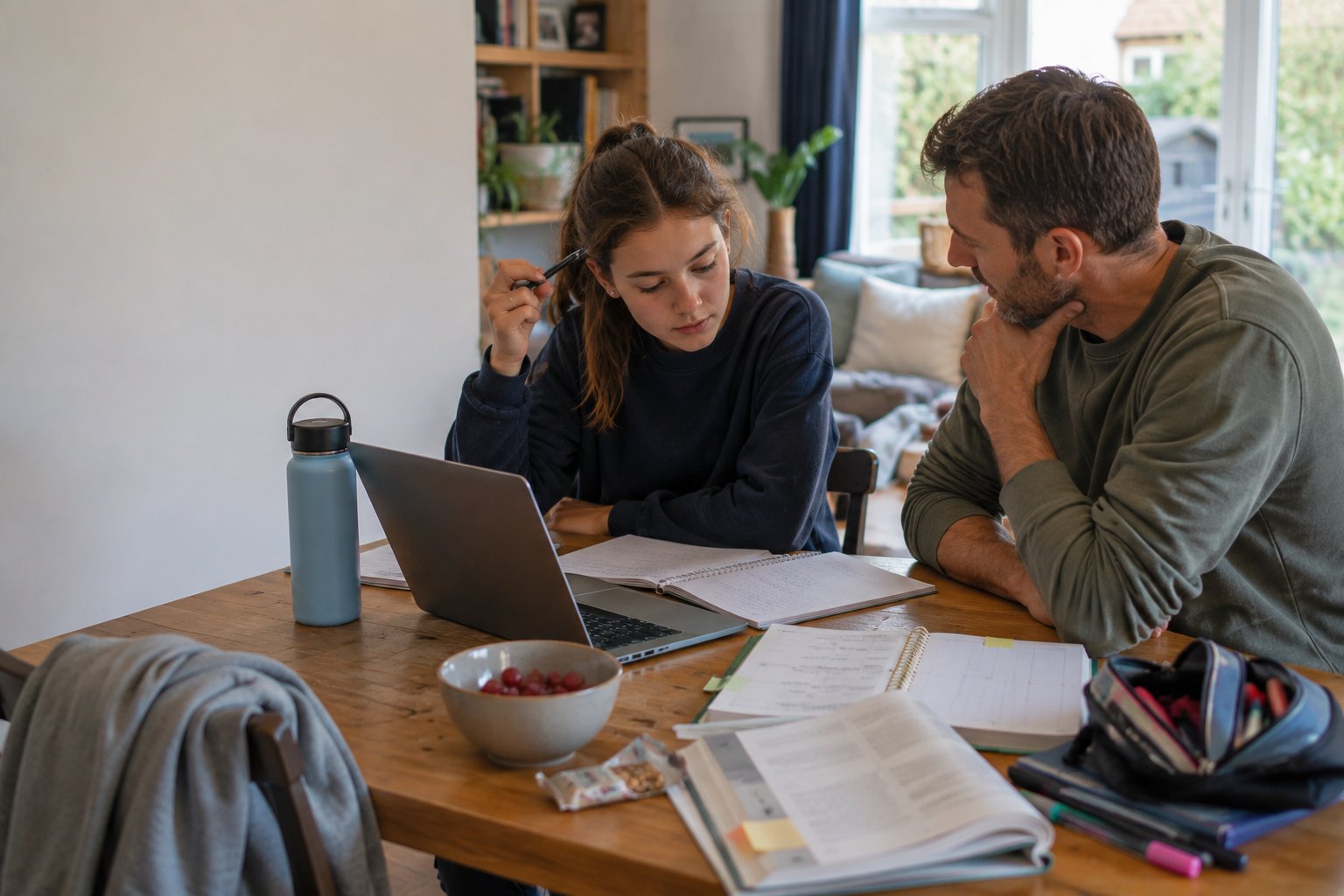
“I liked being able to learn in a way that actually made sense to me, without feeling like I was always getting it wrong.”
Some need a different approach. Some have experienced anxiety around education. Some have gaps following illness or disrupted schooling. Others simply process information differently or need more time than they were able to have in a classroom.
We do not start from the assumption that there is something wrong with the learner. Instead, we look at what helps them learn.
That might mean changing the pace, breaking tasks into smaller stages, using more visual explanations, reducing the amount of writing expected at first, building movement or breaks into sessions, using different resources, adjusting the level of challenge or simply allowing more time for a learner to think before answering.
Personalised tutoring should genuinely be personalised. Not the same lesson delivered more slowly.
We write about why this matters in why personalised learning matters, and you can read about how we approach matching on our tutors page.
Helping Parents Keep Track of Learning
When you home educate, you can sometimes reach the end of a week and wonder what you have actually covered. Ongoing Plan For Success students receive weekly feedback through Google Classroom, including what was covered and how the learner approached the session. Home educating families can use this as part of their own record keeping if they wish.
It is not an official home education report, but it provides a useful ongoing record of learning. More detailed written progress reports can also be arranged, and you will find what is included at each level on our investment page.
Starting With the Learner
You do not need to decide which type of support you need before getting in touch. We can start with a conversation, a focused assessment or a fuller planning process depending on what would actually be useful.
- A conversation-led consultation. A discussion about what is happening now, what you are hoping for and what kind of support would suit, with a short written summary and a suggested next step.
- A focused initial assessment. A tutor establishes the learner's current starting point in a subject, identifies strengths and areas to work on, and recommends how to proceed.
- A fuller diagnostic and planning process. A more detailed written assessment and a personalised learning plan, for families planning something longer-term.
Assessments can be booked as standalone sessions. There is no obligation to continue afterwards, and some families use an assessment purely to get an independent view of where their learner stands. Details of each option are on our services and investment pages.
Book a Free 10-Minute CallNot Sure What Kind of Home Education Support You Need?
You do not need to have the whole pathway figured out.
You might know that something is not working but not know whether the answer is a tutor, a different curriculum, formal qualifications, a change of routine or simply some reassurance that you are not missing something.
Tell us what is happening now, what your child is interested in, what you are worried about and what you hope life might look like a year or two from now.
From there, we can help you work out whether Plan For Success can support part of that journey.