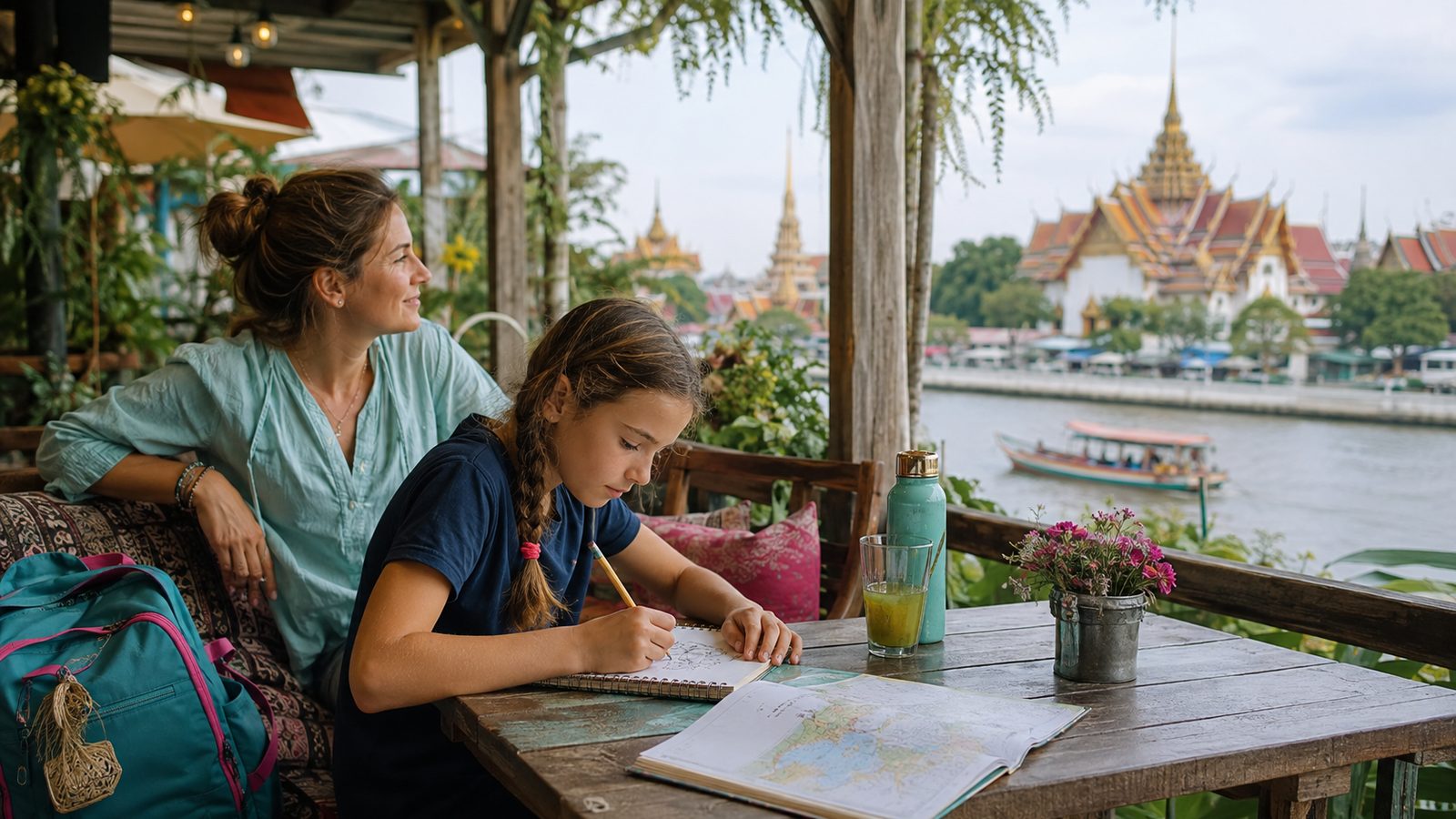
Worldschooling can look wonderfully simple from the outside. A family travels, children learn from the places they visit, and education becomes part of everyday life rather than something confined to a classroom. In reality, it is usually more layered than that. Some families worldschool for a year, while others make it a long-term way of life. Some follow a fairly structured academic programme while travelling, whereas others build learning around places, projects and interests. Many move between the two depending on the child, the subject, the stage they are at and what life happens to look like at the time.
That flexibility is one of worldschooling’s biggest strengths, but it is also why there is no single blueprint for doing it well. For UK families especially, questions tend to come quickly. Do we need to follow the National Curriculum? What happens when GCSEs come into view? How do children make friends? Should we be using online school, tutors, textbooks or none of those things? What does a realistic week actually look like when you are also changing countries, managing travel days and trying to enjoy the places you have gone to see? This guide brings those questions together in one place.
What does worldschooling actually mean?
Worldschooling is generally used to describe an approach to home education where travel and real-world experience become a significant part of learning. That might mean visiting ancient ruins instead of only reading about them, using local markets to practise Maths, hearing different languages spoken in everyday life, exploring ecosystems firsthand or learning about culture through the people a family meets. The learning is often woven into ordinary life rather than separated into neat school-style subjects.
That does not mean every experience has to become a formal lesson. Children do not need to stand in front of a cathedral completing a worksheet about architecture, nor does every journey need to be turned into an educational project. Sometimes the learning happens because they are immersed in a different environment, asking questions, noticing differences and making connections that would be difficult to reproduce from a textbook alone.
Academic learning can still sit alongside that. A child might spend part of the morning working on Maths or English and the afternoon exploring a new city. Another family might have several days with very little formal study followed by a quieter period where they settle into a more regular routine again. That is why worldschooling is better understood as a flexible educational approach rather than a fixed curriculum.
Worldschooling, home education and unschooling are not the same thing
These terms are often used interchangeably online, but they describe slightly different things. Home education is the broader educational context for educating a child outside school. Worldschooling is one way of doing that, with travel and place-based learning playing a significant role. Unschooling is a philosophy that places much greater emphasis on learning being led by the child’s interests rather than by a prescribed curriculum.
In practice, many families blend approaches rather than fitting neatly into one label. A worldschooling family may take a very child-led approach to History, Geography or Science because those subjects emerge naturally through travel, while keeping a more structured approach to Maths, written English or examination preparation. Another family may follow a full British or international curriculum online but build travel experiences around it. What matters much more than the label is whether the approach is appropriate for the learner and sustainable for the family.
What is the legal position for UK families?
The legal position depends on where in the UK you live, so it is important to check current guidance for your nation and your own circumstances. In England and Wales, parents have the legal responsibility to ensure that their child receives a suitable education, either by regular attendance at school or otherwise. Families who choose home education have considerable flexibility over how that education is provided, and there is no requirement to reproduce school at home or follow the National Curriculum.
If a child is already enrolled at a mainstream school in England or Wales, parents would usually formally deregister them in writing before beginning home education. Arrangements can differ where a child attends a special school, and the position is also different in Scotland and Northern Ireland. Families who are travelling for long periods should also think about practical matters such as their home address, local authority communication and how they would demonstrate that education remains suitable if questions arise.
None of that means worldschooling has to become heavily bureaucratic, but it is worth understanding your responsibilities before leaving rather than trying to work everything out from another country. This is general information rather than legal advice, so families should check current official guidance or speak to a reputable home education organisation if they are unsure about their own situation.
What does worldschooling look like day to day?
This is one of the questions people ask most often, and there really is no standard answer. Some families imagine they will maintain a school-style timetable while travelling, then discover quite quickly that this does not fit the reality of moving between places. Others begin with almost no structure and later find that their child benefits from a few predictable routines. For many families, the most sustainable rhythm sits somewhere in between.
Slow travel often helps. Constantly moving every few days can be exhausting for adults and children, and it leaves very little space for routines to develop. Staying somewhere for several weeks can make it easier to balance learning, friendships, rest and exploration. It can also give children enough time to become familiar with an area rather than feeling as though every day is another arrival or departure.
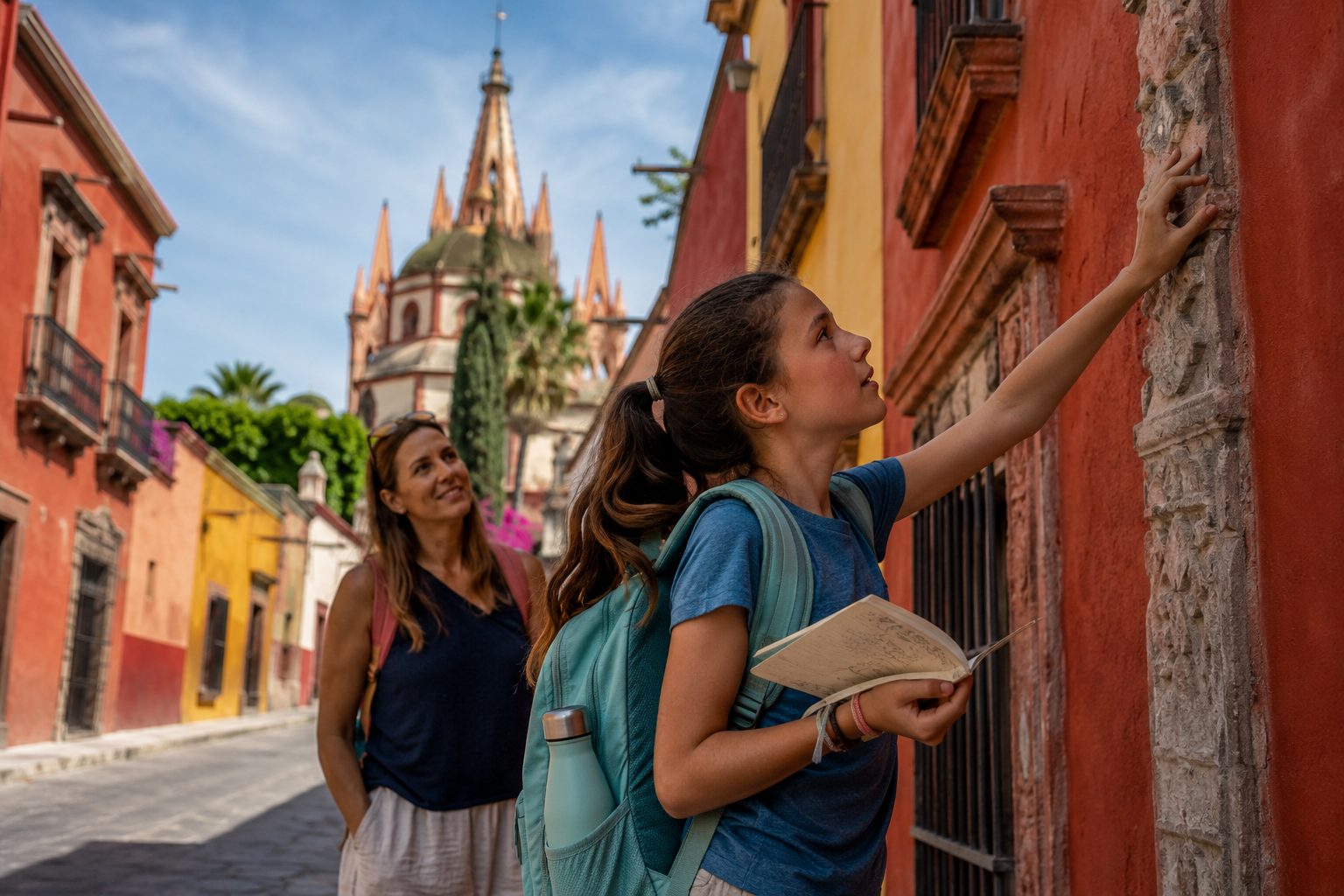
Some families prefer to do more focused academic work in the morning and keep afternoons free, while others work around heat, local activities, transport or the child’s natural rhythm. A learner may do far better with Maths in the evening than at 9am, and worldschooling gives families the freedom to notice that. Consistency can still matter, particularly for children who find frequent change tiring, but that consistency does not have to mean a rigid timetable. It might be a regular reading habit, a familiar online session each week, a set of resources that travel with the family or simply knowing that certain subjects will be revisited regularly.
The goal is usually not to make every day look the same. It is to create enough structure that learning does not become chaotic while keeping enough flexibility for travel to remain worth doing.
Do you need to follow a curriculum?
No single curriculum is required for worldschooling, and many families change their approach over time. When children are younger, parents may feel comfortable working fairly loosely. Reading, writing, Maths and general knowledge can be developed through everyday life alongside books, projects and online resources. As children get older, families often start thinking more deliberately about future qualifications and what knowledge needs to be covered.
Some continue broadly with the English National Curriculum. Others use Cambridge International or Pearson Edexcel qualifications, online schools or distance-learning providers. Some create their own programme and only become more structured when examinations come closer. A hybrid approach is very common because it allows families to be structured where structure is useful without making every part of education look the same.
A learner might have regular Maths and English because those subjects benefit from sequencing and repeated practice, while Science develops through projects, museums, documentaries, experiments and travel experiences. Another student may follow a full GCSE programme in several subjects while keeping everything else far more flexible. The most useful question is not “Which curriculum should worldschoolers use?” but “What does this learner need for the path they are likely to take next?” That answer often changes with age.
What about GCSEs, IGCSEs and other exams?
Worldschooling does not prevent a learner from taking formal qualifications, but examinations usually require more forward planning than many other aspects of travelling education. Students can sit GCSEs, IGCSEs and A Levels as private candidates, which means families arrange examinations directly with an approved centre rather than through a school.
The availability of particular subjects and specifications varies between centres, so it is worth researching this early. Some qualifications include coursework, practical components or speaking assessments that can make private entry more complicated. For that reason, some home educating and travelling families choose IGCSE specifications where the assessment model works more easily for private candidates, but that does not mean every IGCSE is automatically the best choice. Families still need to look carefully at the subject, specification, exam board and available centres.
Travel plans may also need to adapt around examination dates. A family who normally moves every few weeks may decide to spend several months in one country during an exam year, while others return to the UK for exams or use an international centre. The important thing is not to leave this until the final few months. A learner may be academically ready but still unable to sit the exact specification they have studied if a suitable centre has not been arranged.
What about friendships and socialisation?
Socialisation is one of the biggest concerns families raise before starting worldschooling, and it is a reasonable concern because travel changes how friendships work. A child attending school sees many of the same people every day, whereas a travelling learner may move between communities much more frequently. That can mean some friendships are intense but short-lived, others continue online for years, and some children need longer than others to feel comfortable in new groups.
Worldschooling communities can help. There are established hubs, family meet-ups and activity groups in many popular destinations, and local sports clubs, language classes, music groups, co-working communities and home education networks can also create opportunities to meet people. Online friendships often become more significant too, especially when children want to maintain relationships with friends from home or with people they have met while travelling.
Not every child thrives in highly social travel environments, and that is important to acknowledge. Some learners may need more support to build connections, while others may prefer a smaller number of familiar relationships rather than constantly meeting new people. The useful question is not simply whether worldschooling provides “enough socialisation”, but whether the learner has access to relationships and communities that work for them.
Where tutoring can fit alongside worldschooling
Some families choose to add tutoring alongside worldschooling when they want more consistency in a particular subject, specialist support for GCSEs or IGCSEs, or simply one familiar educational relationship that can continue across countries and time zones. Tutoring does not need to replace experience-led learning or recreate school remotely. Used selectively, it can provide structure where it is useful while leaving the wider worldschooling approach flexible.
If you are specifically considering that kind of support, our guide to online tutoring for worldschooling and travelling families explains when tutoring can help, what to look for in a tutor and how it can fit around travel.
Practical things families often learn along the way
One of the biggest lessons many families discover is that travelling and learning both require energy. The first few days in a new place are not always the best time to insist on a full academic timetable. Children may be tired, adjusting to a new environment or simply desperate to explore, and allowing time to settle can make the learning that follows much more productive.
It is also easy to over-plan. Families sometimes leave home with detailed schemes of work, folders, textbooks and ambitious weekly timetables, only to realise that much of it does not suit the life they are actually living. A smaller set of reliable resources is often far more useful than trying to carry an entire school curriculum around the world, especially when the family is moving regularly.
Internet access is another practical consideration. Online learning works brilliantly when the connection is reliable and can become very frustrating when it is not. Families using tutors, online schools or digital platforms may need to check accommodation carefully, have mobile data as a backup or plan offline work for certain destinations. Examinations, visas, travel insurance, time zones and accommodation can all affect educational planning too. None of these things need to dominate family life, but they are easier to manage when considered in advance.
Perhaps most importantly, the educational plan needs to be allowed to change. A six-year-old worldschooler and a sixteen-year-old preparing for GCSEs have very different needs, and what works brilliantly during one year may not work at all during the next. Flexibility should include the freedom to become more structured when that becomes useful.
Is worldschooling right for every family?
No, and that is worth saying clearly. Worldschooling can be an extraordinary way to live and learn, but it also asks a great deal of families. Parents are not only managing education. They are managing travel, accommodation, budgets, relationships, routines, work and all the ordinary pressures of family life, often without the support systems they would have at home.
Some children thrive on constant novelty, while others find it exhausting. Some parents love being closely involved in education, while others discover that they miss having more separation between family life and learning. There is nothing wrong with deciding that full-time worldschooling is not right for your family, or that it was right for a period and then stopped being right.
It also does not have to be permanent. A family might travel for six months, spend a year abroad, alternate between periods at home and periods travelling, or choose one overseas base rather than moving continuously. The point is not to prove that worldschooling is better than school. The point is to create an educational life that works for the child and family in front of you.
Final thoughts
Worldschooling can create an unusually rich education because it gives children direct access to places, people, cultures and experiences that would otherwise exist only in books or on screens. But the strongest worldschooling approaches are rarely completely unstructured. Most families gradually work out what needs to stay flexible and what benefits from more consistency, and that balance may involve reading, independent study, online resources, tutors, formal qualifications or simply predictable routines around learning.
What that balance looks like will change from family to family and often from year to year. There is no single version of successful worldschooling, and a child does not need to visit fifty countries, avoid textbooks or learn entirely through travel for the approach to be meaningful. What matters is whether they are learning, developing, maintaining relationships and building a pathway that leaves future options open.
If you are already travelling and wondering how more structured support could fit alongside your current approach, you can also read our guide to online tutoring for worldschooling and travelling families.
About the author
Sophie – Learning Director and Specialist
Sophie has been worldschooling full-time with her son since August 2023. With a background in education, social care and children's rights, she works with home educating, worldschooling and travelling families across the world, offering flexible, relationship-led tutoring that supports confidence, progress and autonomy wherever learning takes place.