
    Additional Learning Needs

    Tutoring That Starts With the Learner, Not the Label

    Labels can be useful. They can help families explain what is happening, access support and navigate education, health and other systems. But a label does not tell us how an individual learner understands an explanation, remembers information, responds to challenge or builds trust with a tutor.

    At Plan For Success, we prefer to start with the learner in front of us. We get to know how they engage, what helps them feel comfortable, what makes learning harder and what allows them to show what they really know.

    That might mean movement, a camera switched off, a different explanation, less writing, more discussion, practical objects, games, visual examples, extra processing time, a change of task or simply taking a few minutes away from the screen.

    There Is No Such Thing as “Normal”

    Some young people arrive carrying the idea that there is a “normal” way to learn, concentrate, communicate or behave, and that they somehow fall outside it. Occasionally they tell us that other young people have said as much to them. We do not find that a useful starting point.

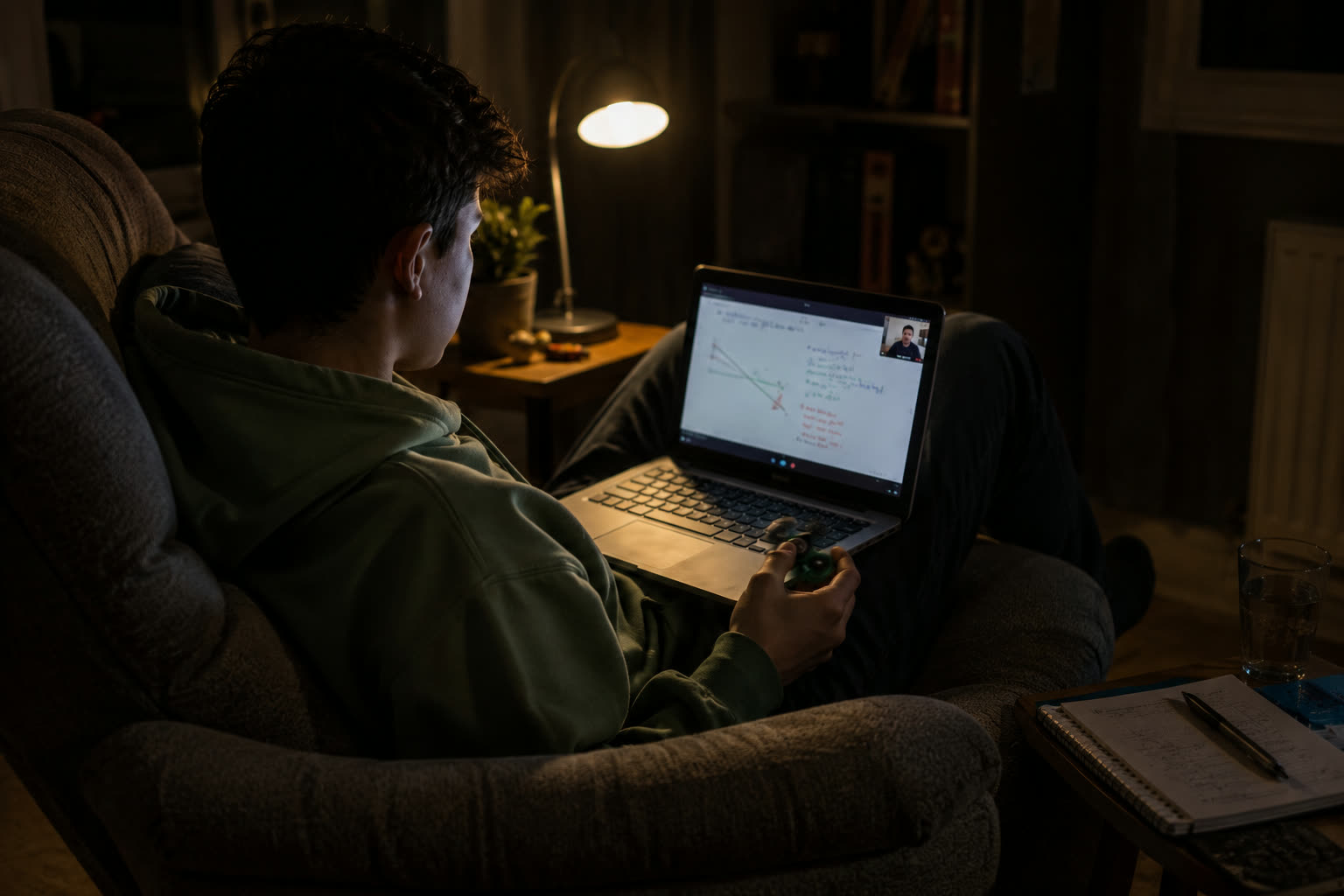
    There is no single normal way to learn. A learner may need movement while listening. They may understand something verbally but struggle to write it down. They may need longer to process a question. They may concentrate better without their camera on. None of those things automatically tell us what they are capable of.

    Our job is not to make a learner look like everybody else. It is to understand what helps them learn and then build from there.

    A diagnosis can be useful information. It is not an instruction manual.

    Teenager taking part in a personalised online tutoring session at home with their camera off and tutor visible on a shared screen.

    One-to-One Gives Us Time to Notice

    In a tutoring session there is one tutor and one learner. That is a very different setting from a classroom of thirty. This is not a criticism of classroom teachers. Many are highly skilled at adapting their teaching, but they are working with a whole class and simply do not have the time to individualise minute by minute for one child.

    Our tutors work with relatively small numbers of learners. That gives them the capacity to remember the details: what worked last week, which explanation finally made sense, which type of question causes frustration, and what helps a learner settle at the start of a session.

    Over time those small observations build into a genuine understanding of the learner. Rapport is not a nice extra alongside the teaching. For many learners it is the thing that makes the teaching possible at all.

    One-to-one tutoring gives us the time to notice.

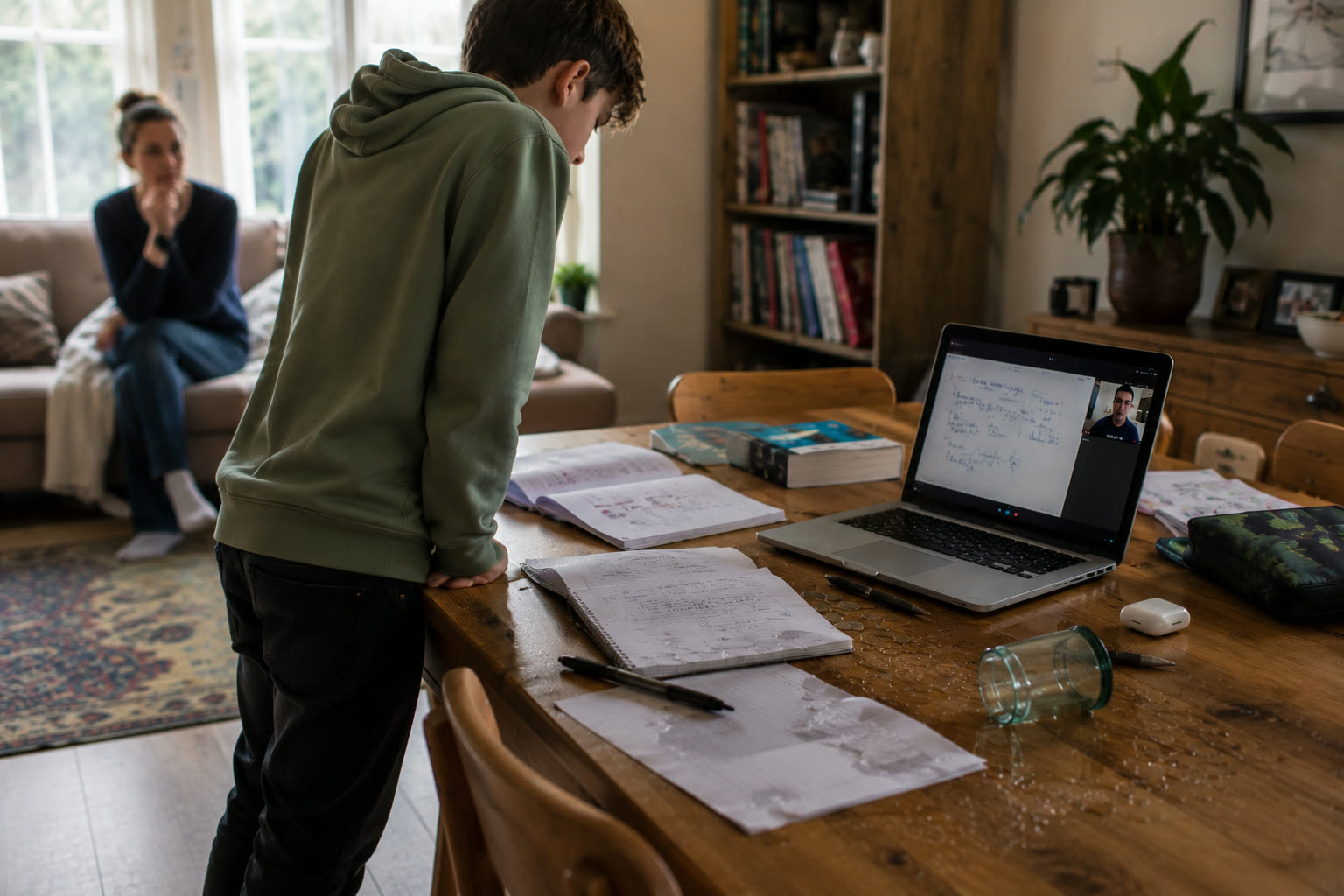
    Learner standing at a kitchen table using coins to work through a maths problem while their online tutor explains on the laptop screen.

    What Can an Adapted Online Session Actually Look Like?

    Adaptation is rarely dramatic. It is usually a series of small, practical decisions made in the moment, based on what the tutor knows about the learner. Here are some of the things that might be part of a session.

    Camera optional

    Some learners concentrate better without being watched, or without watching themselves. Cameras can stay off.

    Movement allowed

    Standing, spinning slightly on a chair, fiddling with something, doodling while listening or getting up for a drink.

    Short screen breaks

    A couple of minutes away from the screen can be far more productive than pushing on through a session that has stalled.

    Props and practical objects

    Coins for maths, objects around the house, paper and pen, or anything that makes an abstract idea concrete.

    Games and retrieval activities

    Quick online games and low-pressure recall activities can do the same job as a worksheet without feeling like a test.

    Demonstration and observation

    Watching the tutor work through something first, then imitating it, before trying independently.

    Visuals, worked examples and analogy

    Diagrams, annotated examples and everyday comparisons often land where a verbal explanation alone does not.

    Speaking before writing

    Talking an answer through first separates the thinking from the writing, which for many learners is the harder part.

    Extra processing time

    Silence after a question is often thinking, not confusion. Tutors ask open questions rather than repeatedly asking "Do you understand?"

    Changing task or pace

    If engagement drops, the tutor can change activity, slow down, or come at the same idea from a different direction.

    Choice and predictable structure

    Choosing what to start with can help. So can knowing roughly how the session will run each week.

    Different ways to show understanding

    Typing, talking, annotating a shared screen or explaining out loud all count as showing what you know.

    Flexible does not mean no expectations.

    There are still goals, there is still challenge and we still expect progress. What can change is the route, particularly when the original route is clearly not helping on that day.

    Sessions are deliberately 50 minutes rather than a full hour, so that no learner is expected to sit in one continuous stretch of tutoring for too long. Within that time the activity can change more than once.

    Engagement Comes Before Forcing the Content

    If a learner is not engaging, the immediate goal is not always to force the subject through. Sometimes the first job is to get them comfortable enough to participate.

    That might mean switching task, stepping away from the subject for a few minutes, talking about something the learner is interested in, using a game, or simply spending time making the online environment feel familiar and predictable.

    “I don’t know”, joking around, avoiding a question, disappearing off screen or flatly refusing can all be information. They may point to overwhelm, to genuine difficulty, to a fear of being wrong, or to a learner who does not yet trust the adult on the other end of the call.

    None of that means abusive behaviour is accepted. Boundaries stay in place. It means the tutor treats behaviour as information and uses it to decide what to do next, rather than reading it as a lack of ability or a lack of effort.

    Sometimes “Not Today” Is the Right Call

    Once a tutor knows a learner well, they can usually tell the difference between productive difficulty and a task that is going nowhere. There are days when pushing on with a particular piece of work will achieve very little beyond confirming to the learner that they cannot do it.

    In those moments a tutor can change direction, do something useful with the remaining time and return to the original task another day. Changing the route is not the same as abandoning the goal.

    Personalisation is not making everything easy. It is knowing when to challenge, when to change approach and when continuing with the same task is unlikely to produce useful learning.

    Three Examples of What Personalised Can Mean

    These are anonymised, illustrative examples drawn from real tutoring experience. Details have been changed and they are written using they and them.

    Movement helped concentration

    One learner found it extremely difficult to sit still for a full session. Their parent had already worked out that running around the garden before tutoring helped them concentrate, so that became part of the routine. If they had not had that movement beforehand and their focus started to drop, the tutor could simply send them off for a few minutes to move before coming back to the lesson.

    The aim was not to make them sit still because that was what a student was “supposed” to do. The aim was to work out what helped them learn.
    Feeling less judged changed the relationship

    One learner came to us after repeated exclusions from school for being described as “mouthy” and for swearing. In tutoring, they were given more space to speak naturally and build a relationship with the tutor without constantly worrying about saying the wrong thing.

    That did not mean there were no boundaries or that abusive language was acceptable. It meant the learner could relax, talk openly and feel less judged. Once that pressure reduced, they engaged well with the tutoring.

    A difficult moment did not end the relationship

    One learner could sometimes complete a session without difficulty and, on another day, become overwhelmed very quickly. They might shout, throw things, switch their camera off or leave the session.

    Their family had experienced a lot of change, and their parent felt that part of the behaviour was about testing whether another adult would disappear when things became difficult.

    We did not end the session at the first sign of distress. The learner was told the tutor would still be there when they were ready. If they turned their camera off, the tutor could turn theirs off too and wait rather than continuing to talk at them. The parent was kept informed about what was happening.

    Over time, the learner began to understand that a difficult moment did not automatically mean the relationship was over. They would come back calmer and re-engage.

    Sometimes what a learner needs is to know that we are not going to give up at the first difficult moment.

    Not sure what would help your learner?

    Talk it through with us

    Progress Does Not Always Look Academic at First

    For some learners, the first signs of progress have very little to do with grades. They look like this.

    Learner pausing beside the table after a frustrating moment while a parent sits nearby and the tutor waits on the laptop screen.
    • Completing a whole session
    • Coming back after a difficult session
    • Saying what they are finding difficult
    • Asking for help
    • Attempting a question without needing reassurance first
    • Tolerating being wrong
    • Staying with a task for longer
    • Explaining their thinking aloud
    • Moving gradually towards academic goals

    Academic progress matters, but only if that is what the learner needs or wants.

    Parents Are Part of the Picture

    All ongoing families receive weekly feedback. That is standard across Plan For Success rather than something added on for particular learners. Feedback can cover how the session went, what was covered and any patterns the tutor is noticing over time.

    It works both ways. You can tell us what is working at home, what tends to go wrong, and what you have already tried.

    Parents know their child incredibly well, and their insight matters. At the same time, we like to give the tutor space to form their own picture of the learner rather than beginning with too many assumptions about what will or will not work.

    That said, anything essential should always be shared from the start, particularly information affecting safety, access to learning or how a learner is likely to engage.

    Assessments Can Be Adapted Too

    The route into tutoring is not fundamentally different for learners with additional learning needs, because all Plan For Success tutoring is personalised in the first place.

    If a learner has struggled with online learning before, or feels anxious about meeting a new tutor, the first session may be more about showing how the platform works, building a little rapport and making the environment predictable. The tutor can gather what they need gradually across that session rather than working straight through a formal assessment.

    All of our sessions and assessments can be adapted. That is not a special exception for one group of learners. It is part of how we work.

    The assessment and support options are set out on our services and investment pages.

    Matching the Tutor Matters

    The first match is made using the information you share with us: the subject, the age, what has happened so far and what you are hoping tutoring will do.

    The tutor carrying out the assessment or the early sessions usually develops a clearer picture. If we think another tutor would suit your child better, whether that is communication style, personality, subject expertise or general approach, we will recommend it.

    A technically excellent tutor is not automatically the right tutor for every learner. Rapport is part of what makes the teaching work. You can read more about the people who would be working with your child on our tutors page.

    We Can Work Alongside School, or Do Something Different

    Some families come to us with clear learning goals or suggestions from school, and tutoring follows those. Others want us to fill gaps that school has not had the time to address, support homework, or focus on exam preparation.

    Sometimes the most useful thing is a separate route entirely, working on foundations or confidence rather than mirroring what is happening in class. We work from the goals and priorities families bring to us rather than from a fixed programme.

    We also work with learners who are not currently in school at all, including home educated learners and those who have been out of education for a while. If that is your situation, our home education page goes into more detail.

    Experience Beyond Tutoring Can Matter

    Our tutors come from a range of backgrounds. Alongside teaching and tutoring, some have experience in areas such as social care, mental health, health and children’s rights.

    That wider experience can help a tutor understand the systems some families are navigating, and why a learner may arrive tired of explaining themselves to professionals. It also tends to make for calmer, steadier adults when a session becomes difficult.

    Tutoring remains tutoring. We do not provide social work, clinical assessment, healthcare referrals or therapeutic intervention.

    Starting With Your Learner

    You do not need to know exactly what kind of support will work before getting in touch. In many cases, that is what the first conversation and assessment help us work out.

    • A conversation-led consultation. A discussion about what is happening now, what you are hoping for and what kind of support would suit, with a short written summary and a suggested next step.
    • A focused initial assessment. A tutor establishes the learner’s current starting point in a subject, identifies strengths and areas to work on, and recommends how to proceed. This can be adapted around rapport and comfort.
    • A fuller diagnostic and planning process. A more detailed written assessment and a personalised learning plan, for families planning something longer-term.

    Details of each option are on our services and investment pages. A short call is usually the easiest place to begin.

    Additional Learning Needs Questions

    More general questions are answered on our FAQ page.

    Plan For Success logoPlan For Success

    Personalised one-to-one online tutoring for learners across the UK and internationally, with 50+ years of combined experience and care. Our experience includes supporting home-educated and travelling families, alongside learners in school.

    All tutors are self-employed professionals and hold an enhanced DBS check (the UK's official criminal background check for working with children).

    © 2026 Plan For Success Tutoring. All rights reserved.