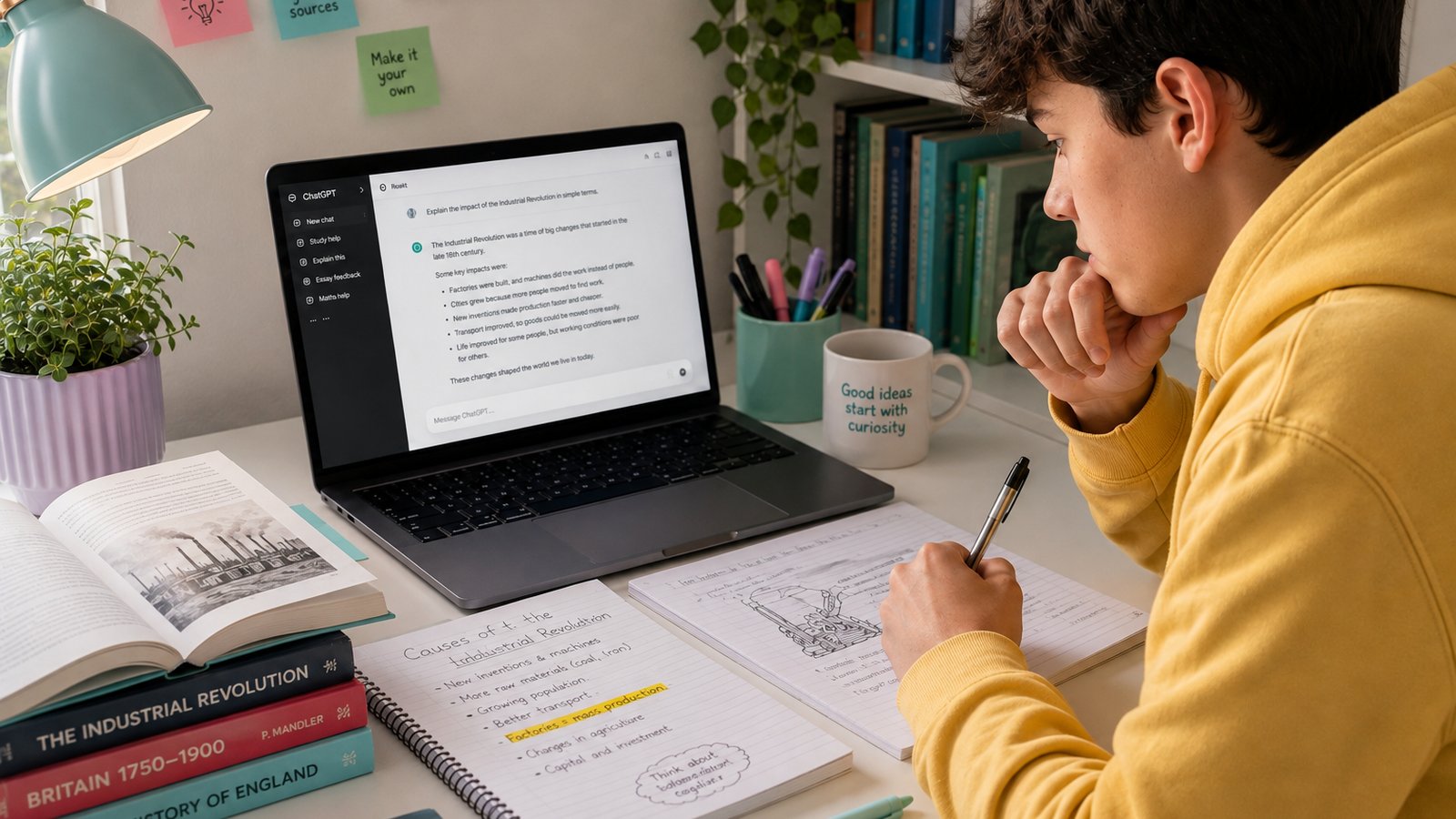
I have been thinking about AI a lot this week, although my interest in it did not start this week. Last summer, I deliberately attended AI sessions run by SAS with professionals from all sorts of industries because I wanted to understand it properly. Not just the impressive bits, but the good, the bad and the ugly. It was one of the most interesting rooms I have sat in for a long time. There were people working in property management, former Microsoft professionals, school managers, game developers and people whose jobs were completely different from mine, and everyone was looking at AI through a different professional lens.
What became obvious very quickly was just how much AI can do to make life easier. It can take repetitive tasks off our hands, organise information, simplify processes, help with planning and administration and save hours on work that really does not need someone sitting there doing the same thing over and over again. Used well, it can give us something most of us are permanently short of: time. And I am all for that. I do not think there is anything especially admirable about spending three hours doing something manually if a tool can help you do it properly in thirty minutes. But there is a difference between using AI to remove repetitive work and using AI to remove the thinking, and that distinction has stayed with me.
What my son’s AI summer camp made me think about
My son attended an AI summer camp with other teenagers, also run by SAS, and he started from almost the opposite position to me. He was completely against AI and did not really see the point of it. He came out of the camp with a much more balanced view. He could see that there were lots of useful things it could do, but one of the biggest messages he took away was that you should not let it do everything for you.
One example was image creation. Rather than simply asking AI to invent the whole thing, the idea was to draw it first, decide what you want it to look like, make the creative decisions yourself and then use AI to help turn that original idea into a digital image. I really liked that because the technology helps with the execution, but the thinking still belongs to you.
The camp also taught him to question what AI creates. He learned about hallucinations, where AI can produce something that sounds completely confident and convincing but is simply not true. He learned that AI can be overly agreeable and sometimes tell us what it thinks we want to hear. They looked at fake photographs, AI-generated images and articles written using AI. For me, that is every bit as important as learning how to prompt it. We do not only need children who know how to use AI. We need children who know when to question it, when to check a source, when to challenge an answer and when to stop and think, “Does that actually make sense?”
We have changed the way we find information before
I also think we need some perspective here because the way we find information has always changed. When I was younger, proper research often meant going to the library. I say that with a lot of affection because I am an ex-librarian, and there really is nothing quite like the smell of books in a library. You would find the books you needed, sit there making notes, follow references and work your way through the information in a very different way to how we do now.
Then came encyclopaedias on CD-ROM. I remember Encarta, which at the time felt incredibly sophisticated. Then Google changed everything again. Suddenly, instead of searching through books or navigating an encyclopaedia, we could type a question and have thousands of possible sources in front of us within seconds. Children growing up today have never known a world where information was not instantly searchable.
And yet I still hear adults use that against them. There is this idea that children today are somehow lazier, less capable or even “thicker” because they have Google, calculators and now AI at their fingertips. I do not think that is fair or especially useful. Every generation has used the tools available to it. The real issue is whether we are teaching children what to do with the information once they have it.
And I am guilty of this too. I have definitely said to my own son, “Check Google” or “Ask ChatGPT” when he has asked me something. It is quick, convenient and sometimes feels like the obvious answer. But if we constantly direct children towards the fastest tool available, we cannot then be surprised when they stop thinking of research as something that involves reading around a subject, comparing information, following a line of enquiry or sitting with a question for a while.
That is probably something adults need to reflect on as much as children do. We are helping to build the habits we later complain about. If every question is met with “Google it” or “ask AI”, then of course those tools become the default. The challenge is teaching children that finding an answer and researching something are not always the same thing.
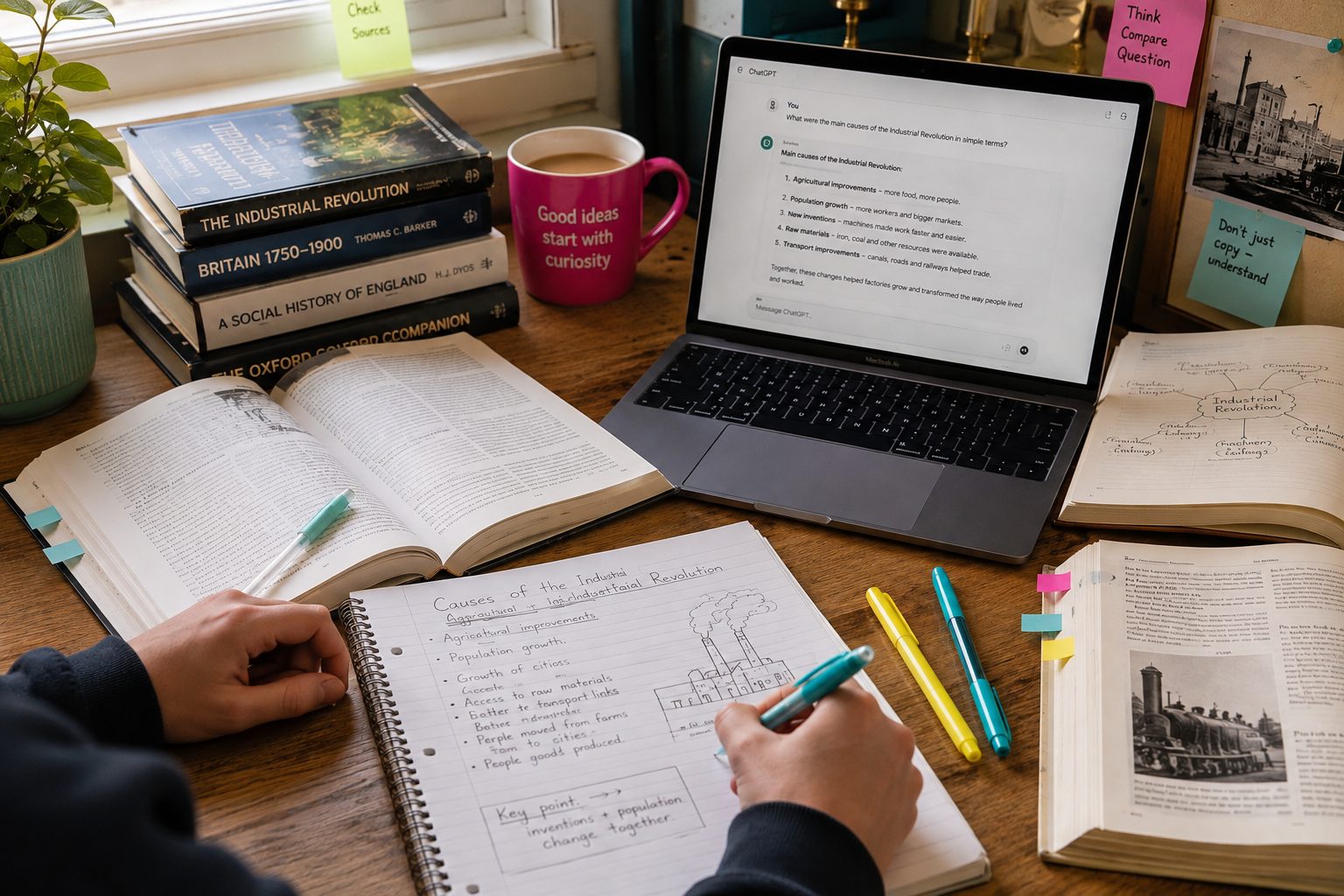
Libraries changed too. Walk into many libraries now and they are computer hubs as much as they are shelves of books. We adapted. We did not respond to computers by removing them from libraries, and we did not respond to Google by insisting children return permanently to encyclopaedias.
AI is simply the next shift, although it is a significant one because it does not just help us find information. It can explain it, summarise it, compare it, rewrite it and increasingly produce something that looks very much like the finished piece of work. That is why I do not think the answer is to try to keep children away from it. The responsibility now is to teach them how to use it properly, how to question it, how to verify what it produces and how to recognise the point where the tool is no longer helping them learn and is simply doing the thinking for them.
The tool has changed. The need to think has not.
The bigger question is whether we are still teaching children to think
For me, this is where education has to get much better. Critical thinking cannot just be something we mention occasionally. It needs to run through the way children are taught to read, research, solve problems, discuss ideas, evaluate sources and use technology.
I do not think children today are somehow less capable of critical thinking than previous generations. They are growing up in a completely different information environment. They are surrounded by instant answers, polished content, algorithms deciding what they see, AI-generated images, videos that may or may not be real and information that can be repeated thousands of times without ever becoming true. That makes the ability to stop, question and form your own judgement essential.
When I say children should question things, I do not mean teaching them to distrust everything or assume everybody is wrong. I mean teaching them not to accept something simply because it looks professional, sounds confident or comes from someone they have been told should know better. That includes AI, but it also includes teachers, adults and professionals. Expertise matters, of course, but children should still feel able to ask, “Why?”, “How do we know that?” and “What evidence is there?” rather than assuming that authority automatically makes something correct.
That matters because AI is very good at producing something that looks like an answer. A polished piece of work does not necessarily tell us what a learner actually understands anymore. A student might use AI to get another explanation, create some practice questions or check their understanding, and those can all be sensible ways to use it. But can they explain why an answer is correct? Can they apply the idea to a different problem? Can they spot when something is wrong? Can they explain their reasoning without opening ChatGPT?
Knowledge matters here too. AI is much easier to use well when you already know something about the subject. If you have experience in an area, you can look at an AI response and recognise that something is not quite right. A learner may not have that same reference point yet. If something is written confidently and looks professional, it is very easy to assume it must be correct. You need knowledge to question what you are being told, and you need context to recognise when something is off.
This matters in tutoring too. AI can generate questions, create examples, help with retrieval and speed up certain tasks, but a tutor still needs to notice when a learner has reached the right answer for the wrong reason, recognise a misconception and decide what should happen next. Good tutoring should not just produce better work. It should help a learner become more capable of thinking for themselves.
That is why questions such as “Why do you think that?”, “How do you know?”, “What would happen if we changed this?” or even “Convince me” matter so much. Those conversations tell us far more about learning than simply looking at a polished final answer.
Sometimes the most important AI skill is knowing when to close it
I am not frightened of AI. I use it, and I have seen what it can do to make life easier and give people back time. I think children should learn how to use it because it is going to be part of the world they study and work in. But using AI well also means knowing when not to use it.
Sometimes you need to draw the picture first, have the idea first, attempt the question first, write the paragraph first or try to remember the answer first. Sometimes you need to sit with not knowing something for a while and work through it. Then bring in the technology if it helps.
We should be teaching children how to use AI, how to question it, how to check it and how to recognise the point where it stops supporting their thinking and starts replacing it. More than that, I think we should be embedding the habit of thinking and questioning throughout education itself.
For me, that is the question I keep coming back to. AI can absolutely support learning, and I think children should be taught how to use it well. But if ChatGPT broke tomorrow, would the child know where to start with the work they had been set?
If the answer is no, then somewhere along the way the tool has probably stopped supporting the learning and started replacing too much of it.